

Nature is filled with remarkable evolutionary marvels, and few creatures captivate wildlife enthusiasts quite like the Bee Hummingbird (Mellisuga helenae). Endemic to the island of Cuba, this miniature avian holds the title of the world’s smallest living bird, possessing extraordinary physical adaptations and rapid flight capabilities.
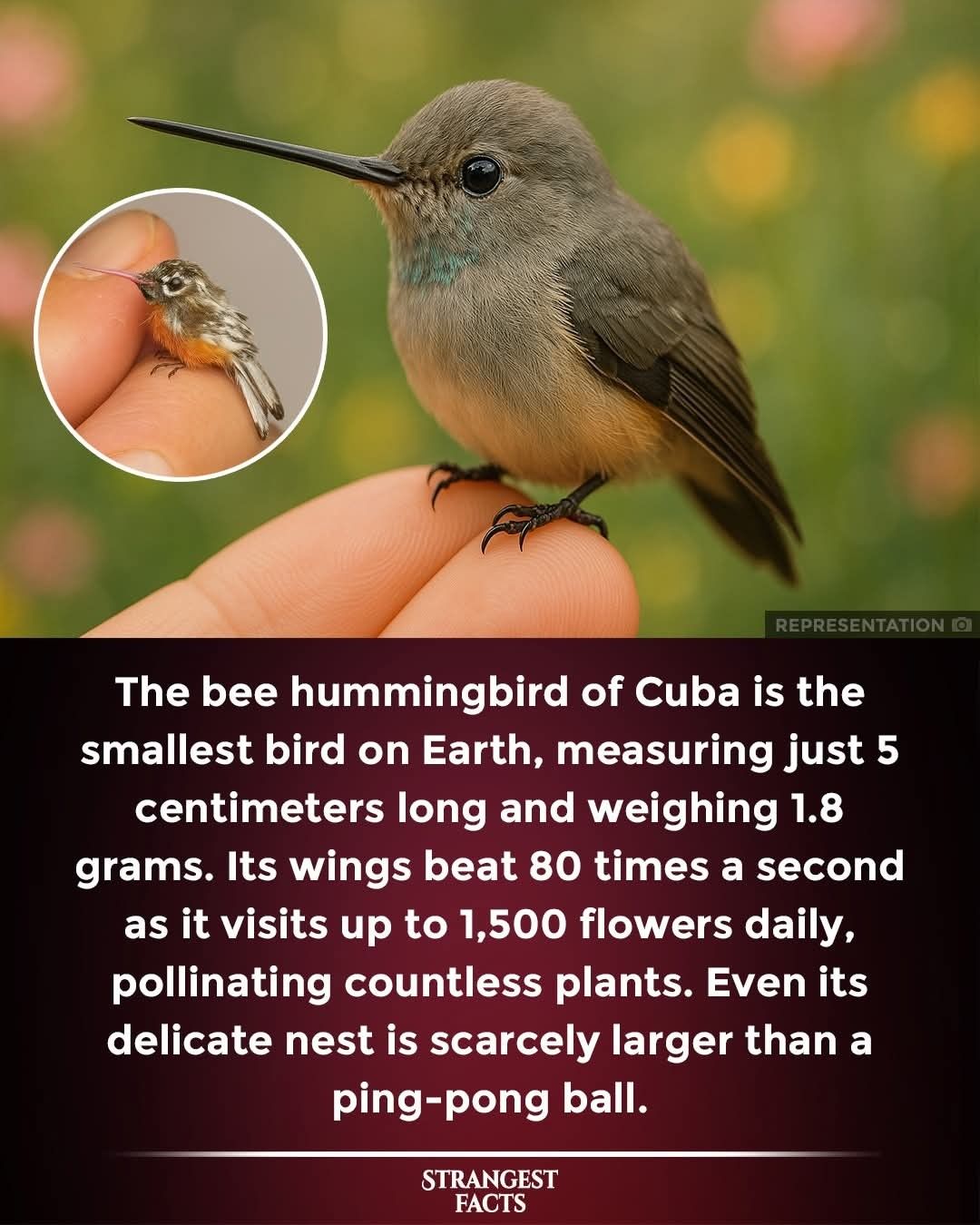
In the graphic above, facts detailing the tiny dimensions and physical abilities of the Bee Hummingbird are highlighted:
- Length & Weight: Measures roughly 5 centimeters (2 inches) long and weighs about 1.8 grams (lighter than a U.S. dime).
- Flight Speed: Wings beat up to 80 times per second during normal flight and display maneuvers.
- Ecological Impact: Visits up to 1,500 flowers per day, serving as an essential tropical pollinator.
- Nest Size: Builds tiny cup-shaped nests barely larger than a ping-pong ball.
In this comprehensive guide, we will explore the fascinating biology, habitat, and ecological role of the world’s smallest bird.
Key Biological Facts and Metrics
The Bee Hummingbird displays extreme biological specialization, with a metabolic rate tailored to support its hyperactive flight habits.
+--------------------------------------------------------+
|             Bee Hummingbird Profile                    |
+---------------------------+----------------------------+
                            |
                            v
+--------------------------------------------------------+
|  Native Habitat: Cuba & Isla de la Juventud            |
|  Average Length: ~5 cm (2 inches)                      |
|  Average Weight: ~1.6 to 2.0 grams                     |
|  Wing Beat Rate: ~80 beats per second                  |
|  Daily Flower Visits: Up to 1,500 per day              |
+--------------------------------------------------------+
1. Tiny Size and Dimensions
Adult male Bee Hummingbirds are slightly smaller than females. Measuring around 5 to 6 centimeters from bill tip to tail tip, they are often mistaken for large bumblebees or sphinx moths when hovering near floral patches.
2. High-Speed Flight Dynamics
To remain suspended in air while feeding, the hummingbird’s wing muscles account for a significant portion of its body mass. Beating their wings in a figure-eight pattern up to 80 times per second, they can fly backward, upside down, and hover with pinpoint accuracy.
3. Essential Role as a Pollinator
While seeking high-energy floral nectar, the Bee Hummingbird picks up pollen on its bill and head. As it visits up to 1,500 flowers in a single day, it plays a critical role in pollinating native Cuban plant species.
4. Nesting and Reproduction
Female Bee Hummingbirds construct tiny, cup-shaped nests using spider webs, moss, and bark flakes. Spider silk gives the nest elasticity, allowing it to stretch as the tiny chicks grow. Eggs laid in these nests are no larger than a coffee bean.
Comparison Table: Bee Hummingbird vs. Standard Hummingbirds
Understanding how extreme the Bee Hummingbird’s size is compared to other common hummingbird species:
| Feature / Metric | Bee Hummingbird (Mellisuga helenae) | Ruby-Throated Hummingbird | Giant Hummingbird (Patagona gigas) |
| Native Region | Cuba | North & Central America | South America (Andes) |
| Average Length | ~5 cm (2 in) | ~8.5–9 cm (3.5 in) | ~23 cm (9 in) |
| Average Weight | ~1.8–2.0 g | ~3.0–3.5 g | ~18–24 g |
| Wing Flap Speed | ~80 beats/sec | ~50–53 beats/sec | ~15 beats/sec |
| Nest Size | ~2.5 cm (Ping-pong ball) | ~4 cm (Walnut shell) | ~8–10 cm (Large cup) |
Environmental Awareness and Biodiversity Preservation
Observing delicate creatures in nature underscores the importance of preserving ecosystems and supporting biodiversity.
Protecting native ecosystems and tropical flora helps safeguard wildlife populations and maintain environmental health. In sustainable architecture and community development, eco-friendly planning preserves green spaces in real estate developments, fostering sustainable eco-tourism opportunities that support local business growth and conservation initiatives for future generations to enjoy in retirement.
How to Support Local Hummingbird Populations
While the Bee Hummingbird is native to Cuba, you can help protect local hummingbird species in your area with these simple steps:
- Plant Native Nectar Flowers: Grow native flowering plants with tubular blossoms (such as salvia, honeysuckle, and bee balm) to provide natural food sources.
- Maintain Clean Feeders: If using artificial nectar feeders, clean them every few days with warm water to prevent harmful mold and bacteria buildup.
- Avoid Chemical Pesticides: Minimizing garden chemical use preserves small insects and spiders, which provide essential protein for mother hummingbirds and young chicks.
Conclusion
The Cuban Bee Hummingbird is a living testament to nature’s incredible diversity. Balancing extreme flight speed, tiny proportions, and massive ecological impact, this miniature bird remains one of the world’s most captivating species.
Have you ever spotted a hummingbird in your backyard? Share your favorite bird-watching moments in the comments below!
FAQ Section
Is the image in the graphic an actual photo of a Bee Hummingbird?
The main image in such graphics is often a digital artistic representation or a photo of a similar juvenile hummingbird resting on a human finger to illustrate scale, as noted by the visual text tag.
What do Bee Hummingbirds eat besides nectar?
In addition to flower nectar for quick sugar energy, Bee Hummingbirds consume small insects and spiders to meet their daily protein and mineral requirements.
Why is the Bee Hummingbird found only in Cuba?
The species evolved as an island endemic in the unique ecosystems of Cuba and the nearby Isla de la Juventud, adapting specifically to local floral nectar sources over thousands of years.