

Sitting posture plays a significant role in social etiquette, ergonomics, personal comfort, and non-verbal communication. From formal business settings and high-society events to casual workplace environments, how one sits communicates confidence, respect, and poise.
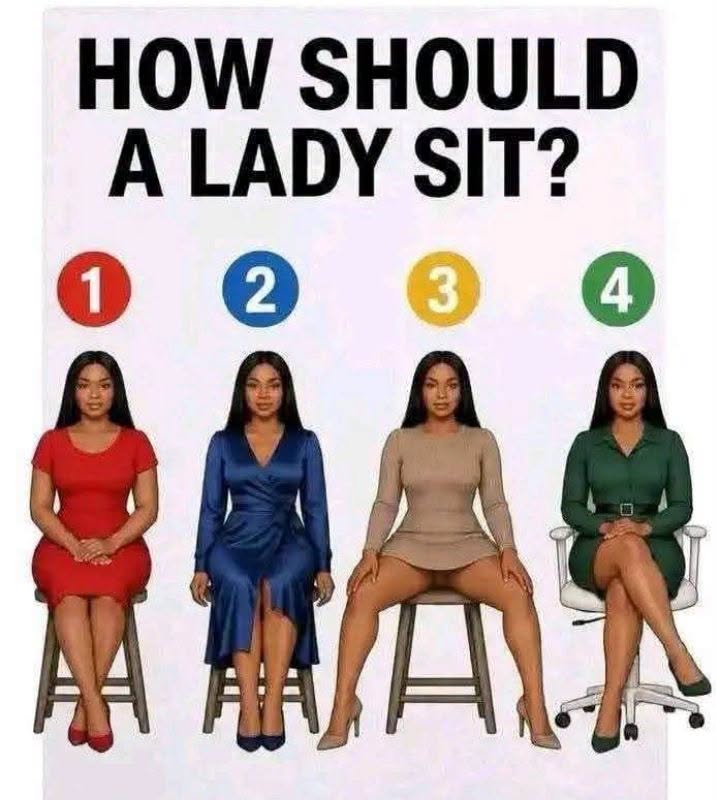
In the graphic above, four distinct sitting postures labeled 1, 2, 3, and 4 demonstrate different legs and body positions. In this article, we will examine traditional etiquette standards, health and spinal alignment benefits, and the body language implied by each sitting position.
Breakdown of the Four Sitting Postures
Traditional social etiquette and modern physical therapy offer distinct insights into each position shown in the graphic.
+--------------------------------------------------------+
|          Sitting Posture Analysis & Etiquette         |
+---------------------------+----------------------------+
                            |
                            v
+--------------------------------------------------------+
| 1. Classic Ankle/Knee Together | 2. Elegant Ankle Cross|
| 3. Wide Spread (Informal)      | 4. Formal Leg Cross   |
+--------------------------------------------------------+
1. Position 1: The Classic Parallel (Knees and Ankles Together)
- Description: Sitting upright with knees pressed together, feet flat on the floor or slightly angled, and hands rested neatly in the lap.
- Etiquette Standard: Universally considered a classic, polite, and formal sitting posture suitable for official events, interviews, and public appearances.
- Ergonomics: Keeps the spine naturally aligned and encourages good posture without straining hip joints.
2. Position 2: The Ankle Cross (“Duchess Slant” Variant)
- Description: Knees stay together while ankles are crossed neatly near the base, often angled slightly to one side.
- Etiquette Standard: Highly recommended in royal and high-level social etiquette (often referred to as the ankle cross or slant). It is elegant, modest, and comfortable when wearing dresses or skirts of any length.
- Ergonomics: Reduces strain on the lower back while maintaining modest coverage and physical poise.
3. Position 3: Wide Open Stance (Manspreading / Exaggerated Casual)
- Description: Legs spread wide apart with knees open and hands rested on the thighs.
- Etiquette Standard: Generally considered informal and improper for formal social settings, especially when wearing short dresses.
- Body Language: Signal of dominant, relaxed, or boundary-testing posture, typically seen in ultra-casual environments rather than formal gatherings.
4. Position 4: The High Knee Cross
- Description: Sitting in an office chair with one leg crossed over the other at the knee.
- Etiquette Standard: A standard, modern business-casual sitting position widely accepted in corporate environments and informal social settings.
- Ergonomics: While common, prolonged sitting with knees crossed can restrict circulation in lower legs and rotate the pelvis unevenly if held for extended periods.
Comparison Table of Sitting Positions
| Position Number | Posture Style | Etiquette Level | Primary Context | Health & Comfort Factor |
| Position 1 | Knees & Ankles Together | High / Formal | Official events, job interviews, ceremonies | Promotes neutral spine alignment |
| Position 2 | Ankle Cross | Very High / Elegant | Royal protocol, formal dinners, business meetings | Comfortable and posture-friendly |
| Position 3 | Wide Leg Spread | Very Low / Informal | Casual home setting, relaxed environments | Relieves hip tightness, non-standard etiquette |
| Position 4 | Crossed Knees | Moderate / Business Casual | Office work, casual dining, social chats | Comfortable short-term, restricts blood flow long-term |
Body Language, Personal Well-Being, and Confidence
How we present ourselves physically impacts both internal well-being and external perceptions in social and professional environments.
Developing strong physical posture supports spinal health, reduces chronic neck or back discomfort, and enhances daily energy. In the workplace, presenting poise and confident body language contributes to strong professional relationships and career growth, supporting long-term personal finance management and economic stability for future retirement. Simple habits in self-presentation yield lasting physical and professional dividends.
Practical Etiquette and Posture Tips
- Keep Shoulders Relaxed: Avoid slouching forward; roll shoulders back and down to keep the chest open and spine straight.
- Choose the Ankle Cross for Comfort: When sitting for extended periods in skirts or dresses, crossing at the ankles is more comfortable and elegant than crossing at the knees.
- Uncross Legs Periodically: To maintain healthy blood circulation, avoid holding a single knee-crossed position for more than 20 minutes at a time.
Conclusion
While traditional etiquette points to Position 1 and Position 2 as the most poised and formal ways for a lady to sit, personal comfort, health, and context ultimately dictate the best choice for any given moment.
Which sitting style do you find most comfortable and natural in your daily routine? Share your thoughts and preferences with friends!
FAQ Section
What is the most formal way for a woman to sit according to traditional etiquette?
Crossing at the ankles with knees together (Position 2) or keeping knees and feet neatly parallel (Position 1) are considered the most formal and elegant postures in traditional etiquette.
What is the “Duchess Slant”?
The “Duchess Slant” is a formal sitting posture popular among British royals, where knees and ankles are kept together and angled slightly to one side to create a flattering line while maintaining modesty.
Is crossing your legs at the knees bad for your health?
Crossing legs at the knees for long periods can temporarily elevate blood pressure and cause pelvical rotation. Physical therapists recommend switching sides frequently or crossing at the ankles instead.