

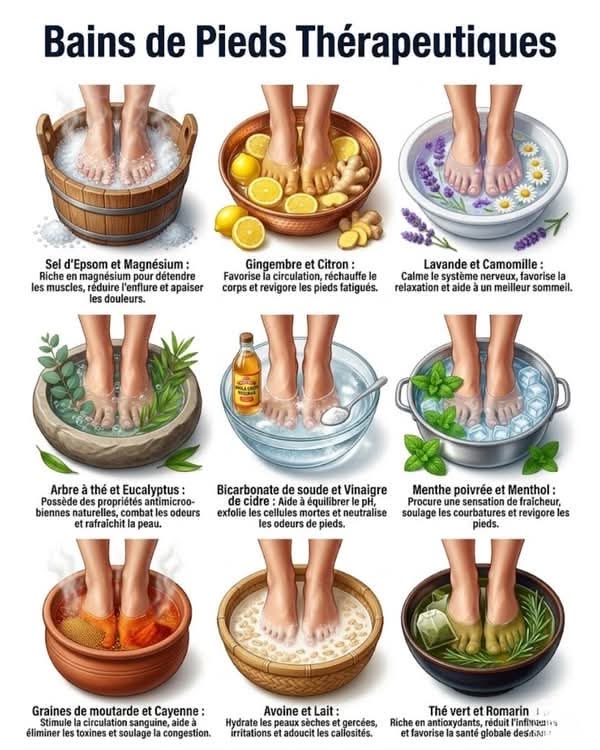
After long hours spent standing, walking, or wearing restrictive footwear, our feet carry the heavy burden of daily physical activity. Therapeutic foot soaks (Bains de Pieds Thérapeutiques) have been used for centuries across diverse cultures to soothe tired muscles, improve peripheral circulation, soften dry skin, and promote whole-body relaxation.
Blending warm water with target botanical ingredients, mineral salts, or natural essential oils creates an easy, at-home hydrotherapy treatment. In this comprehensive guide, we will explore nine therapeutic foot soak combinations, analyze their specific wellness benefits, examine the science behind hydrotherapy, and look at practical ways to incorporate foot care into your daily wellness routine.
The Science of Hydrotherapy and Foot Soaks
To understand why therapeutic foot baths are so effective, it helps to look at how local heat and mineral immersion interact with the circulatory and nervous systems.
+--------------------------------------------------------+
|    Warm Water Immersion & Natural Mineral Absorption   |
+---------------------------+----------------------------+
                            |
                            v
+--------------------------------------------------------+
|    Promotes Vasodilation & Enhances Blood Circulation  |
+---------------------------+----------------------------+
                            |
                            v
+--------------------------------------------------------+
| Direct Relief for Muscle Tension, Odor, & Skin Dryness |
+---------------------------+----------------------------+
                            |
                            v
+--------------------------------------------------------+
|   Activates Parasympathetic System for Whole-Body Rest |
+--------------------------------------------------------+
1. Vasodilation and Circulation
Soaking feet in warm water (typically between $37^\circ\text{C}$ and $40^\circ\text{C}$) induces localized vasodilation—the widening of blood vessels. This process enhances blood flow to lower extremities, facilitating oxygen transport and easing muscular soreness.
2. Transdermal Absorption and Skin Softening
Warm water hydrates hard calluses and dead skin cells, making manual exfoliation effortless. When combined with natural ingredients like colloidal oatmeal, milk, or mineral salts, foot baths help restore essential hydration to dry, cracked heels.
9 Powerful Therapeutic Foot Soak Formulations
Each natural ingredient combination offers distinct properties tailored to specific health and foot care goals.
1. Epsom Salt and Magnesium (Sel d’Epsom et Magnésium)
- Primary Benefits: Rich in magnesium compounds to help relax tense muscles, reduce swelling, and ease joint aches.
- Best Used For: Muscle recovery after intense physical activity or long work shifts.
2. Ginger and Lemon (Gingembre et Citron)
- Primary Benefits: Promotes healthy circulation, warms cold feet, and invigorates tired lower extremities.
- Best Used For: Cold weather comfort and sluggish circulation.
3. Lavender and Chamomile (Lavande et Camomille)
- Primary Benefits: Calms the central nervous system, encourages deep relaxation, and aids in better sleep quality.
- Best Used For: Evening unwinding and bedtime relaxation routines.
4. Tea Tree and Eucalyptus (Arbre à thé et Eucalyptus)
- Primary Benefits: Contains natural antimicrobial properties, combats stubborn foot odor, and deeply refreshes the skin.
- Best Used For: Foot hygiene, athletic care, and preventing fungal buildup.
5. Baking Soda and Apple Cider Vinegar (Bicarbonate de soude et Vinaigre de cidre)
- Primary Benefits: Helps balance skin pH, gently exfoliates dead surface cells, and neutralizes persistent foot odors.
- Best Used For: Exfoliation, smoothing rough skin, and odor control.
6. Peppermint and Menthol (Menthe poivrée et Menthol)
- Primary Benefits: Provides an immediate cooling and refreshing sensation, relieves muscle soreness, and revitalizes aching feet.
- Best Used For: Hot summer days and immediate relief after long periods of standing.
7. Mustard Seed and Cayenne (Graines de moutarde et Cayenne)
- Primary Benefits: Strongly stimulates blood flow, helps flush out local tissue stagnation, and relieves chest or nasal congestion through warming reflexology.
- Best Used For: Deep thermal warmth and cold-weather seasonal care.
8. Oatmeal and Milk (Avoine et Lait)
- Primary Benefits: Deeply hydrates dry, cracked skin, calms skin irritation, and softens stubborn calluses.
- Best Used For: Sensitive, itchy, or heavily callused feet needing gentle nourishment.
9. Green Tea and Rosemary (Thé vert et Romarin)
- Primary Benefits: Rich in protective antioxidants, reduces swelling, and supports overall vascular foot health.
- Best Used For: Reducing fluid retention and protecting skin cell health.
Therapeutic Foot Soak Recipe Comparison
Selecting the ideal foot bath mixture depends on your specific physical goal.
| Soak Combination | Key Active Compounds | Targeted Benefit | Best Time to Use |
| Epsom Salt & Magnesium | Magnesium Sulfate | Muscle relaxation & swelling reduction | Post-workout or late evening |
| Lavender & Chamomile | Essential oils, Flavonoids | Stress reduction & sleep support | 30 minutes before bedtime |
| Baking Soda & Vinegar | Sodium Bicarbonate, Acetic Acid | Odor control & skin pH balancing | Mid-week foot care maintenance |
| Oatmeal & Milk | Lactic Acid, Beta-Glucans | Skin hydration & callus softening | Weekend self-care routine |
| Peppermint & Menthol | Menthol, Volatile oils | Cooling relief & muscle soothing | Immediately after work or exercise |
Proactive Wellness, Self-Care, and Quality of Life
Prioritizing foot care is an essential yet often overlooked aspect of personal health and preventative physical wellness. Healthy feet support proper posture, joint alignment, and overall physical mobility into your retirement years.
Building small, consistent self-care routines avoids high healthcare costs and reduces reliance on expensive specialized therapies. Managing personal finance effectively means investing in accessible, high-value home care tools that deliver compound dividends for long-term health and independence.
How to Prepare a Home Therapeutic Foot Soak
- Step 1: Fill the Basin: Fill a large foot basin or tub with warm water (comfortable to the touch, around $38^\circ\text{C}$).
- Step 2: Add Ingredients: Mix in $1/2$ cup of Epsom salt, 5–10 drops of targeted essential oils, or 1 cup of brewed botanical tea.
- Step 3: Soak and Relax: Submerge your feet for 15 to 20 minutes while relaxing in a comfortable chair.
- Step 4: Exfoliate and Dry: Use a pumice stone or soft washcloth to gently remove softened dead skin, then dry your feet thoroughly—especially between the toes.
- Step 5: Moisturize: Apply a rich foot lotion or natural oil to seal in hydration.
Fascinating Historical Facts About Hydrotherapy
- Ancient Roman Baths: Roman public bathhouses (thermae) featured specific heated pools (caldaria) and cold plunge pools (frigidaria) to stimulate circulation and promote wellness.
- Traditional Chinese Foot Reflexology: In Traditional Chinese Medicine, foot soaking in herbal decoctions has been used for thousands of years to balance the body’s internal energy and warm the meridians.
- Epsom Salt Discovery: Epsom salt was first discovered in 1618 in Epsom, England, when a local farmer noticed cattle refused to drink the mineral-rich well water, which was later found to heal skin scratches and soothe muscle strain.
Conclusion
Therapeutic foot soaks are a simple, luxurious, and highly effective way to care for your physical health at home. Whether you need the muscle-relaxing power of Epsom salt, the hydrating richness of oatmeal and milk, or the refreshing burst of peppermint, natural ingredients offer targeted relief for every foot care need.
Set aside 20 minutes this week to prepare your favorite foot bath, sit back, and enjoy the soothing benefits of natural hydrotherapy!
FAQ Section
How long should I soak my feet in a foot bath?
The optimal foot soak duration is between 15 and 20 minutes. Soaking for longer can over-saturate and prune the skin, potentially leading to dryness.
Can I combine different ingredients from the guide?
Yes! For example, combining Epsom salt (for muscle relief) with lavender oil (for relaxation) creates an exceptional evening foot soak blend.
Is it safe to use foot soaks every day?
Gentle foot soaks using plain warm water, Epsom salt, or soothing herbs can be enjoyed daily. However, limit acidic ingredients like vinegar or intense exfoliants to 2–3 times per week to prevent skin irritation.