

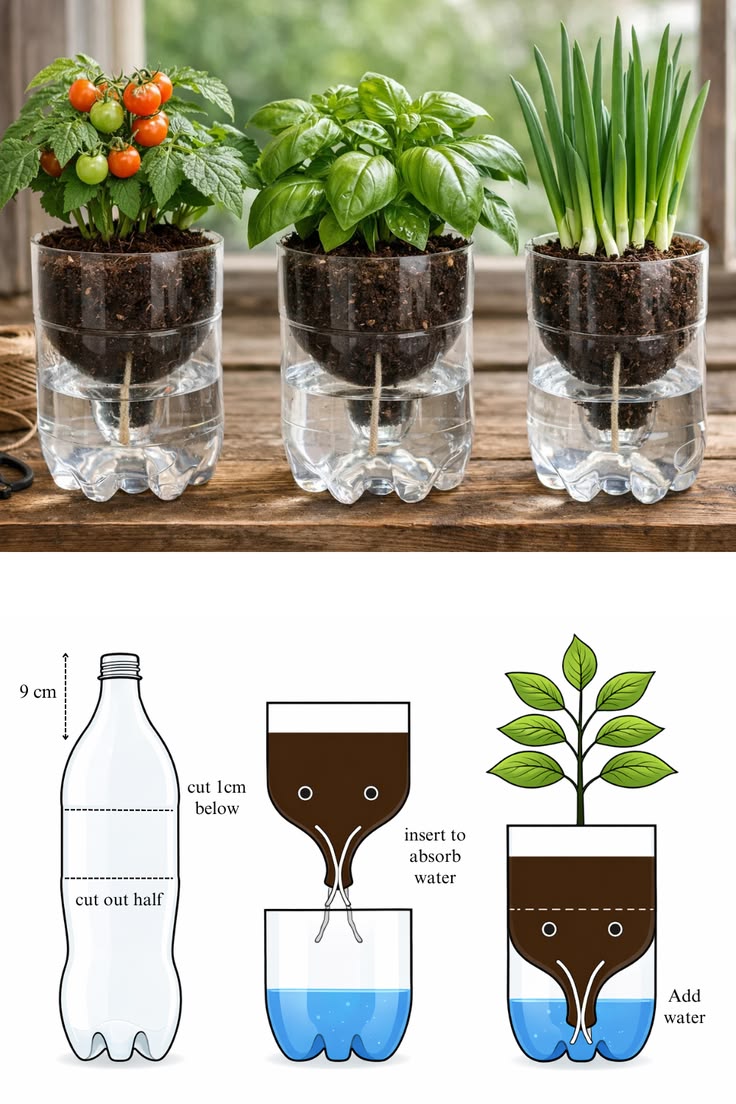
Indoor gardening offers an enjoyable way to grow fresh herbs, micro-vegetables, and decorative plants right on your windowsill. However, maintaining consistent soil moisture can be challenging, especially for busy individuals or travelers. Overwatering can lead to root rot, while under-watering causes plants to wilt and stall in growth.
Self-watering planters solve this issue by utilizing capillary action—a natural phenomenon where liquid flows upward through porous materials against gravity. By upcycling plastic bottles, you can create efficient, low-cost self-watering containers that deliver steady moisture directly to plant roots. In this step-by-step guide, we will break down how to craft these sub-irrigated planters, explore the capillary mechanics involved, look at the best plants to grow, and examine the broader environmental and economic benefits of home upcycling.
The Science of Sub-Irrigation and Capillary Action
To understand why self-watering bottle planters work so well, it helps to examine the physical mechanisms governing fluid movement in soil.
+--------------------------------------------------------+
|       Water Reservoir in Lower Cut Plastic Base        |
+---------------------------+----------------------------+
                            |
                            v
+--------------------------------------------------------+
|   Wicking Material (Cotton/Jute String) Absorbs Water  |
+---------------------------+----------------------------+
                            |
                            v
+--------------------------------------------------------+
| Capillary Action Draws Moisture Upward into Soil Mass |
+---------------------------+----------------------------+
                            |
                            v
+--------------------------------------------------------+
|   Roots Access Continuous, Even Hydration as Needed    |
+--------------------------------------------------------+
1. Passive Wicking Action
When a natural fiber wick (such as cotton twine or jute cord) extends from a water reservoir into potting soil, water molecules adhere to the fiber surface and draw upward into the dry medium. The soil absorbs only as much moisture as it loses to plant uptake and evaporation, maintaining ideal soil moisture levels automatically.
2. Oxygenation and Root Health
Traditional bottom-drained pots can become waterlogged if standing water blocks oxygen flow. Sub-irrigated bottle planters keep the top soil layer ventilated while delivering moisture straight to the lower root zone, preventing root decay and encouraging strong root architecture.
Step-by-Step Guide: Building a Self-Watering Plastic Bottle Planter
Creating a self-watering planter requires basic household tools and less than 10 minutes of preparation.
Materials Needed
- Clean plastic bottle (1.5L or 2L soda/water bottle)
- Scissors or utility knife
- Cotton string, jute twine, or fabric strip (acting as the wick)
- Potting mix (lightweight, peat- or coir-based)
- Seeds or young seedlings (e.g., cherry tomatoes, basil, green onions)
Assembly Instructions
- Measure and Cut the Bottle: Measure roughly 9 cm from the top spout down and cut the bottle into two sections. Cut out the middle portion to leave a stable lower base reservoir and an inverted funnel top.
- Prepare the Wicking System: Thread a long piece of cotton string or fabric through the narrow bottle spout so that a generous length hangs into the bottom reservoir while the remainder extends up into the top funnel section.
- Invert and Nest: Turn the top funnel upside down and nest it securely inside the bottom reservoir base, keeping the wick hanging straight down into the lower reservoir.
- Add Soil and Plant: Hold the wick vertically in the center of the inverted funnel while filling it with lightweight potting mix. Plant your chosen seeds or seedlings into the soil.
- Fill the Water Reservoir: Lift the top soil container, pour fresh water into the bottom reservoir, and re-nest the top section so the wick rests in the water.
Comparing Home Upcycling to Commercial Planters
Making your own sub-irrigated planters from repurposed plastic offers distinct environmental and financial benefits.
| Feature | DIY Upcycled Bottle Planter | Commercial Self-Watering Pot |
| Material Cost | Near-zero (Uses household recyclables) | Moderate to high retail expense |
| Environmental Impact | Diverts single-use plastics from landfills | Uses newly manufactured plastic or ceramic |
| Customizability | Easy to cut, resize, and decorate | Fixed sizing and structural design |
| Watering Frequency | Refill reservoir once every 7–14 days | Refill reservoir once every 7–14 days |
Sustainable Living, Home Economics, and Personal Wellness
Incorporating upcycled DIY projects into daily routines provides lasting value for personal well-being and practical household management.
Growing herbs, tomatoes, and leafy greens at home enhances nutrition, reduces food waste, and fosters mindfulness. Repurposing single-use plastics directly aligns with sustainable household practices. Lowering daily grocery expenses through windowsill gardening fits neatly into personal finance strategies, freeing up resources for long-term investments like real estate or retirement savings. Small, practical habits—like upcycling packaging and growing fresh food—yield compounding rewards for both body and budget.
Best Plants for Small Self-Watering Containers
- Fresh Culinary Herbs: Basil, parsley, cilantro, and mint thrive exceptionally well in sub-irrigated bottle planters because they demand steady soil moisture.
- Green Onions and Chives: Scallions are quick to grow in small containers and regenerate rapidly after trimming.
- Compact Cherry Tomatoes: Dwarf indoor tomato varieties flourish when provided constant water access during flowering and fruit production.
- Leafy Greens: Leaf lettuce, spinach, and microgreens produce rapid harvests in shallow container setups.
Practical Maintenance Tips for Self-Watering Systems
- Use Natural Fiber Wicks: Synthetic fibers like nylon do not absorb or transport water as effectively as 100% natural cotton or jute.
- Top-Water Initially: Water the top soil gently during initial planting to establish capillary contact between the dry soil and the wet wick.
- Clean the Reservoir Periodically: Every few weeks, empty and rinse the bottom water reservoir to prevent algae growth and keep the water clean.
Fascinating Facts About Upcycling and Sub-Irrigation
- Ancient Sub-Irrated Agriculture: The principles behind sub-irrigation date back to ancient civilizations, including the suspended gardens of Babylon and Aztec chinampas (floating agricultural islands).
- Plastic Bottle Lifetime: Polyethylene terephthalate (PET) bottles can take up to 450 years to decompose in landfills, making upcycling projects an effective way to extend their useful lifecycle.
- Reduced Water Evaporation: Sub-irrigated containers reduce water loss from surface evaporation by up to 60% compared to traditional top-watered pots.
Conclusion
Building your own self-watering planters from plastic bottles is a simple, eco-friendly project that makes indoor gardening easier and more efficient. By leveraging natural capillary action, these sub-irrigated containers deliver consistent hydration to plants while repurposing everyday household waste.
Give this straightforward DIY technique a try on your kitchen windowsill, watch your herbs and vegetables thrive with minimal effort, and enjoy the rewards of sustainable home gardening!
FAQ Section
How often do I need to add water to the reservoir?
Depending on room temperature, humidity, and plant size, the bottom reservoir typically holds enough water to hydrate plants for 7 to 14 days before needing a refill.
Can I use synthetic yarn as a wick?
Natural fibers like 100% cotton or jute work best because their porous structures draw water efficiently through capillary action. Synthetic materials like 100% polyester or nylon often repel water.
What type of soil is best for self-watering planters?
Use a light, fluffy potting mix containing peat moss, coco coir, or perlite. Avoid heavy garden soil or dense clay, which can compact and prevent water from wicking evenly.